
If you’ve built or assembled a motorcycle from different parts—whether new, used, or salvaged and are wondering if you can legally register it with the Land Transportation Office (LTO), the answer is yes, but you’ll need to go through a special registration process designed for rebuilt or locally assembled motorcycles to prove your bike’s legality and roadworthiness.
This process exists to verify the legality of all components and ensure your motorcycle complies with national safety and emission standards. Please be aware of the law based on LTO Memorandum Circular No. 542-2004 and current LTO procedures.

What Is a Rebuilt or Assembled Motorcycle?
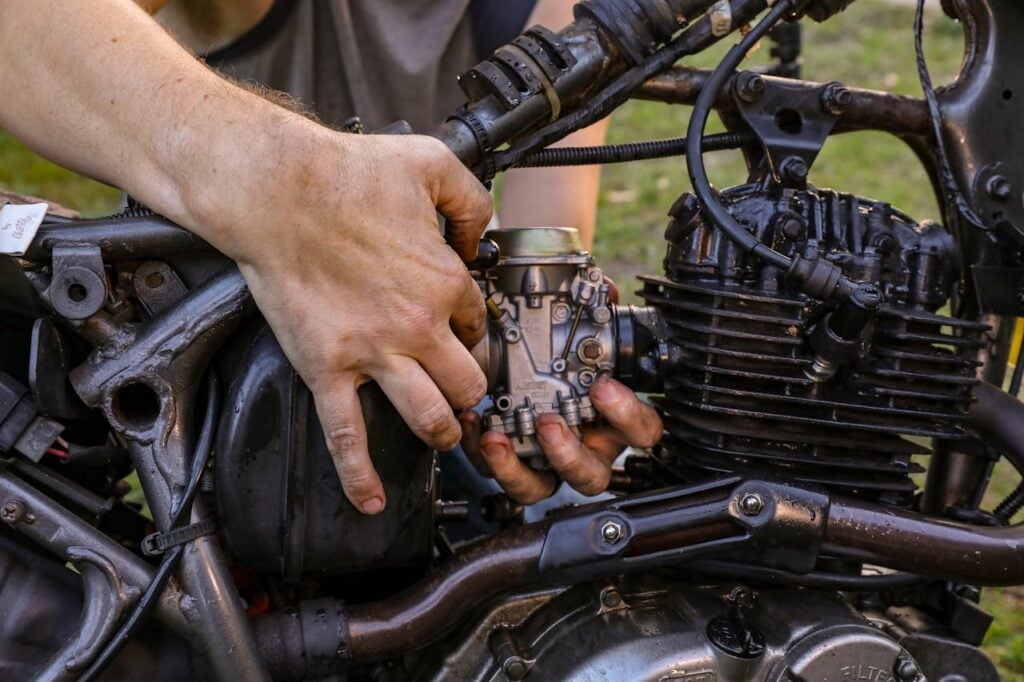
A “rebuilt” or “assembled” motorcycle is a unit put together using parts from one or more other motorcycles, which may include locally bought or imported components. It could also mean a salvaged unit—a motorcycle restored from usable parts of previously registered or junked vehicles.
You can register it with the LTO as long as you can prove that all major parts (engine, chassis, and body) were legally acquired.
Legal Basis
According to LTO Memorandum Circular No. 542-2004, only the LTO Regional Offices can process and encode data for the initial registration of rebuilt or undocumented motorcycles. This measure preserves the integrity of the national vehicle database and prevents the registration of stolen or “chop-chop” units.
If any document or part is found questionable, the registration will not proceed. The LTO may also conduct further investigation, especially for salvaged units or motorcycles with unclear origins.
How Does it Differ from Registering Factory-Made Motorcycles
Registering a rebuilt or assembled motorcycle involves more documents, inspections, and clearances because you must prove the legality and safety of each part. It takes more time, effort, and documents to register than a factory-made motorcycle (brand new or secondhand) because all required documents and compliance certifications will have to be acquired and gathered manually rather than being handled by either the manufacturer or dealer or the previous owner.
Here’s a detailed summary of what it means to register a motorcycle rebuilt or assembled from parts:
- Requires special registration under LTO Memorandum Circular No. 542-2004
- Must prove the legal origin of all major components (engine, chassis, body)
- Needs an Affidavit of Rebuilt or Assembly signed by the owner and mechanic
- Requires PNP-TMG clearance to verify that no parts are stolen
- Must undergo thorough inspection and emission compliance testing
- Often needs confirmation of records from different LTO offices if parts came from previously registered vehicles
- Registration is handled only by LTO Regional Offices (not all branches can process this)
- Processing time is longer due to validation and verification steps
- Applicable only to locally assembled motorcycles (undocumented imports not allowed)
- Plates and Certificate of Registration (CR) are issued only after investigation and approval
What Kind of Motorcycles are Covered Under this Process?
This applies to motorcycles that are:
- Assembled from local or imported parts
- Rebuilt from salvaged or secondhand units
- Locally fabricated using a combination of old and new components
Note: Undocumented imported motorcycles (or units with no proof of legal importation) cannot be registered.
Frequently Asked Questions (FAQs)
For your reference, here are some common questions related to registering motorcycles assembled from parts:
1. Can backyard-assembled motorcycles be registered?
Yes, but only if:
- All materials used are properly documented (with sales invoices and affidavits of fabrication).
- The chassis is inspected and assigned a computer-generated chassis number by the LTO.
- The Regional Office supervises the stamping process.
2. What happens if the parts don’t have complete documents?
The LTO will not process the registration. Missing invoices, importation papers, or clearances could mean the parts are undocumented or illegally sourced (“chop-chop”), which is a serious violation. Always make sure to keep proof of purchase and clearances.
3. Do I need to publish a notice before registering a rebuilt motorcycle?
Usually, publication is only required for undocumented vehicles or when the LTO cannot trace the previous records. For regular rebuilt motorcycles with complete documents, this is not necessary.
4. What if the motorcycle doesn’t pass inspection or emission testing?
You’ll need to fix the issue first before reapplying. The LTO will not approve registration unless your motorcycle is roadworthy and emission compliant.
5. Is there a risk of rejection even if I have documents?
Yes. If the engine or chassis numbers don’t match or if there are inconsistencies in your paperwork, the LTO can suspend or deny your registration. Always double-check before submitting.
6. Can I use my assembled motorcycle for delivery or business purposes?
Yes, but after registering it as a private motorcycle, you must apply for a franchise or change classification at the LTO if you plan to use it for commercial delivery services.
7. Can I ride my assembled motorcycle while waiting for registration?
No. Riding an unregistered motorcycle is illegal and can lead to fines or impoundment. Wait until you receive your Certificate of Registration (CR) and license plate from the LTO.
Important Reminders
To ensure that the registration procedure is completed smoothly, you may want to keep these things in mind:
- Do not use undocumented parts.
- Only locally assembled units are accepted.
- Emission compliance is mandatory.
- Keep all receipts and affidavits.
- Double-check all serial numbers on the engine and chassis—they must match the documents.
- Work with a trusted mechanic who can help you prepare an accurate Affidavit of Assembly or Rebuild.
For more information, you may check this guide on How to Register Your Motorcycle with the LTO.