
No. Tricycles are prohibited from operating on national highways in the Philippines due to long-standing safety rules from the LTO, DOTr, and later reinforced by the DILG through multiple memorandums and updates. They are only allowed on local roads unless an LGU creates a specific exception when no other route exists. The rule is meant to protect drivers, passengers, and everyone on the road.
This guide explains why the ban exists, the legal basis behind it, the penalties involved, and what tricycle drivers should do to stay safe and compliant.
Why Tricycles Cannot Operate on National Highways
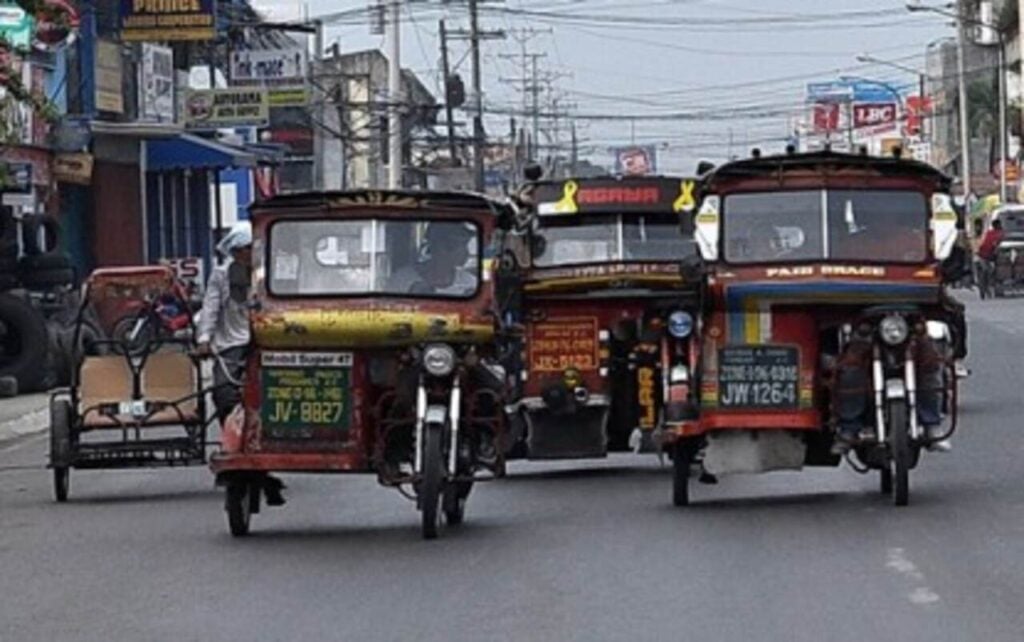
The ban is not new. It has been in place since LTO Memorandum Circular 94-1994, which clearly states that tricycles are not allowed on national highways used by four-wheel vehicles over 4 tons and where normal speeds exceed 40 kph.
This rule was issued by the Department of Transportation (then DOTC) and the LTO.
It also allows:
- The Sangguniang Bayan or Sangguniang Panlungsod to issue exceptions only when no alternative route exists.
Note: This memo is the main legal basis for the ban.
This rule is also repeatedly echoed in various rules and memoranda:
1. DILG and DOTr/DOTC Joint Memorandums (2007–2023)
The DILG repeatedly reiterated the same rule, not because it created the policy, but because LGUs were not enforcing it. These include:
- DILG MC 2007-01
- DILG–DOTC Joint MC 01 s. 2008
- DILG MC 2011-68
- DILG–DOTR/LTO Joint MC 001 s. 2017
- DILG MC 2020-004
- DILG MC 2020-036
- DILG MC 2020-145
- DILG Memorandum dated October 21, 2022
- DILG MC 2023-195
All these repeat the same safety requirement:
- Tricycles are not allowed on national highways where heavy vehicles pass and driving speeds exceed 40 kph.
2. DILG Memorandum Circular 2023-195 (Latest Reiteration)
This memo “reinforces” the prohibition because:
- Many LGUs still allow tricycles on highways
- There are still many accidents involving tricycles on high-speed roads
It directs LGUs to:
- Update their Tricycle Route Plans
- Assign alternative roads
- Install signages
- Impose penalties
- Coordinate with PNP
- Hold consultations with tricycle groups
- Consider exceptions only as a last resort
This memo does not create a new ban—it only reminds LGUs to enforce the old LTO rule.
3. Metro Manila Traffic Code of 2023
Section 16, Article II also:
- Prohibits tricycles on national highways within the NCR
This matches the LTO 94-1994 standard.
4. Republic Act 4136 (Land Transportation and Traffic Code)
While RA 4136 does not explicitly mention tricycles on highways, it provides the safety authority for:
- Setting weight limits
- Setting speed limits
- Regulating vehicles allowed on public highways
This law serves as the legal foundation for the LTO and DOTr to restrict certain vehicles (like tricycles) from dangerous road environments.
5. Authority of Local Governments (Local Government Code of 1991)
Sections 447(3)(VI) and 458(3)(VI) give LGUs the power to regulate tricycles, BUT:
- LGUs must follow DOTC/DOTr/LTO guidelines
- Tricycle operations must comply with national rules
- Exceptions can only be made when no alternative route exists
Main Reasons for the Ban
Some of the main reasons cited for this prohibition include:
- Safety risks: Tricycles move slower and are smaller than most highway vehicles. This speed difference increases the chances of severe accidents.
- Heavy and fast traffic: Highways carry large vehicles (buses, trucks, private cars) that travel beyond 40 kph, creating unsafe conditions for tricycles.
- Accident data: In 2022 alone, Metro Manila recorded 2,241 tricycle-related road accidents.
Penalties for Tricycles Using National Highways
Drivers often get confused, so here is the straightforward breakdown:
- First offense: ₱1,000
- Fourth offense: ₱5,000 or 1 month imprisonment or both, depending on the court
Some LGUs may also suspend or revoke the MTOP (Motorized Tricycle Operator’s Permit).
Are There Exceptions?
Yes—but they are very specific.
The Sangguniang Bayan or Sangguniang Panlungsod may allow tricycles on a portion of a national highway only if there is absolutely no alternative route.
Even then, the LGU must create an ordinance and enforce safety measures in the outermost lane.
How LGUs Must Enforce the Policy
Local governments are required to:
- Form or update their Tricycle Task Force
- Draft or update the Tricycle Route Plan including:
- schematic maps
- signages and safety markings
- info campaigns
- color schemes or emblems for tricycles allowed on routes touching highways
- penalties for violators
- Coordinate with the Local Public Transport Route Plan team
- Conduct consultations with drivers and barangays
- Set minimum operating conditions for MTOP/POP
- Develop long-term alternative routes or infrastructure
- Consider exceptions only when no alternative roads exist
- Work with the PNP for enforcement
What Tricycle Drivers Should Do
To stay compliant and avoid penalties, tricycle drivers must:
- Stick to local roads. Tricycles are meant for local routes only.
- Check your LGU’s route plan. Some areas have updated maps showing exactly where tricycles can and cannot pass.
- Follow local ordinances. LGUs may have additional rules on franchises, roadworthiness, and routes.
- Report unclear or confusing routes. Your municipal or city hall can clarify designated tricycle paths.
If you see violations you should report them to your LGU, barangay, or PNP for everyone’s safety.