
If you’re riding a motorcycle in the Philippines, you already know how hard it is to travel without proper storage. This is why many riders install saddlebags—storage compartments attached to the sides of a motorcycle, giving riders extra space for carrying personal items, tools, or travel essentials. Because poorly installed or oversized saddlebags can affect balance, block visibility, or cause accidents, the Land Transportation Office (LTO) sets requirements to keep riders and other road users safe. The saddlebag regulation rules are set in accordance with the LTO Memorandum dated March 15, 2016 and DOTC Joint Administrative Order 2014-01, both of which were created to manage motorcycle accessories that may affect road safety and proper vehicle operation.
But before adding anything to your bike, it’s important to know that there are clear rules on installing and using motorcycle saddlebags. Learn more about these requirements and guidelines so you can avoid penalties, hassles at checkpoints, and accidents caused by unsafe setups.
What the Law Says
The use and installation of saddlebags on motorcycles are governed by an LTO Memorandum dated March 15, 2016, which outlines size limits, placement rules, attachment requirements, and the need for registration for custom-made saddlebags.
Along with the provisions offered by DOTC Joint Administrative Order 2014-01, which imposes a ₱5,000 penalty for unauthorized or improper accessories, the government hopes to regulate items that may cause harm to others on the road. In fact, the rules were created after consultations with riders, enforcement units, and industry stakeholders, especially as the number of delivery riders and long-distance travelers on the road continue to rise.
What Saddlebags Are Allowed by the LTO?
Saddlebags are considered motorcycle accessories. They can be DTI-approved or custom-made. The rules depend on what type you install.
1. DTI-Approved Saddlebags
These do not need inspection, registration, or apprehension as long as they meet the LTO guidelines.
Requirements:
- Must be securely attached to the motorcycle.
- Must not be installed higher than the seat of the motorcycle or scooter.
If your saddlebags are designed specifically for motorcycles and approved by DTI, you’re generally safe. Just make sure they are attached properly and follow the height rule.
2. Custom-Made Saddlebags (Subject to LTO Inspection & Registration)
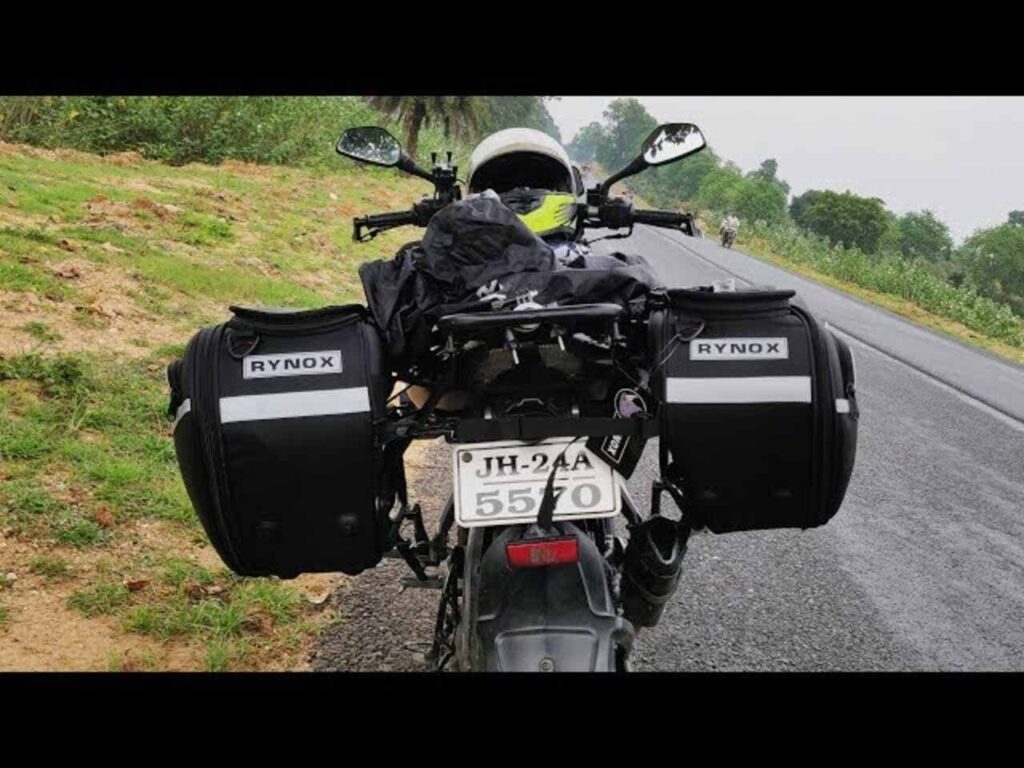
Custom-made saddlebags have stricter rules. These must follow the exact size and placement limits:
Requirements (no changes allowed):
- Must be securely attached to the motorcycle.
- Installation must not be higher than the seat of the motorcycle or scooter.
- Must not exceed 14 inches from the sides.
- Length must not go beyond the tail end of the motorcycle or scooter.
Registration Fee:
- ₱100 at the LTO.
Penalties for Violations
Riders who do not register their custom-made saddlebags or who use saddlebags that do not follow the LTO’s measurements and placement rules may be apprehended.
Penalty:
- ₱5,000 fine, for “motor vehicle operating without or with defective/improper/unauthorized accessories, devices, equipment and parts” under DOTC Joint Administrative Order 2014-01, Section 11-D.
Only LTO Law Enforcement Officers or deputized agents who enforce RA 4136 and related transportation laws are allowed to apprehend violators.
Tips for Motorcycle Riders
Here’s what you can do if you already got a saddlebag for your motorcycle without knowing about these rules:
- Check if your saddlebags are DTI-approved or custom-made.
- If custom-made, compare them to the exact measurements listed above.
- Make sure they are securely attached and do not block mirrors or go beyond the seat or tail.
- Register your custom-made saddlebags at LTO (₱100 fee).
- Keep your OR/CR and saddlebag registration slip when traveling.