
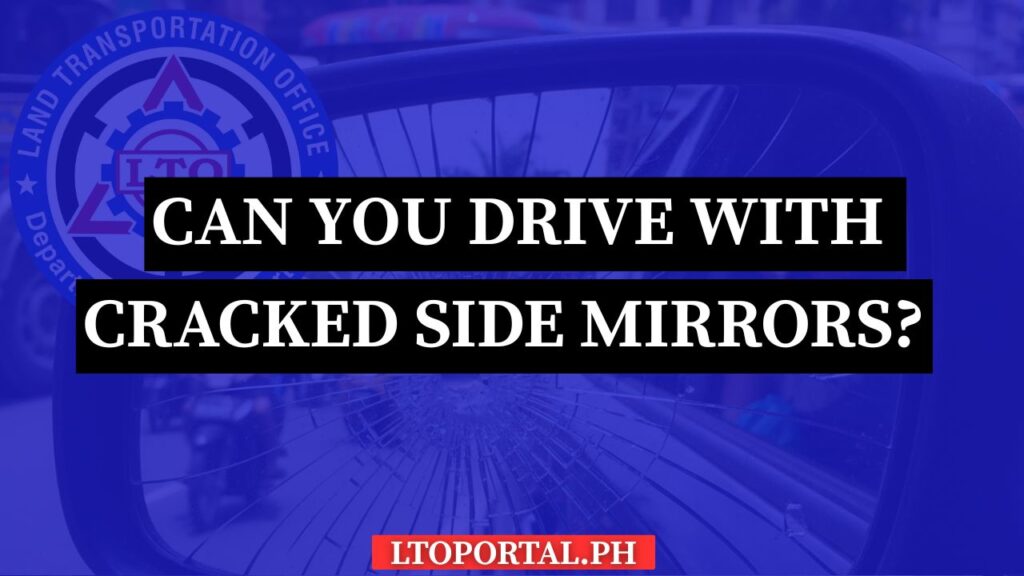
Driving with a cracked or damaged side mirror is generally not allowed and is treated as a driving violation. Under LTO rules, all vehicles must have clear and usable side mirrors. If a crack affects visibility, traffic enforcers can flag your vehicle as unroadworthy, issue a ticket, fine you, and even impound the vehicle until the mirror is fixed.
Also Read: Are Modified Bumpers and Bull Bars Allowed?
For many drivers, this feels frustrating—especially when the crack seems small. But from an enforcer’s point of view, a cracked side mirror can distort images, hide vehicles, and increase blind spots. If you keep driving with a damaged side mirror, you risk fines ranging from ₱1,500 to ₱5,000, access restrictions on expressways, and wasted time dealing with penalties instead of simply fixing the mirror early.
What the Rules Actually Say
Under Joint Administrative Order No. 2014-01 and Republic Act 4136, all motor vehicles must be in proper working condition, including having clear and usable side mirrors on both sides. A cracked or damaged side mirror that affects visibility is treated as defective equipment, making the vehicle unroadworthy under LTO rules and MVIS standards. Traffic enforcers may stop the vehicle, issue a citation, impose fines, and require repairs before the vehicle can legally continue on public roads.
Also Read: Are LED/Colored Lights Legal on Motorcycles?
Is Driving With a Cracked Side Mirror a Violation?
- Yes, if the crack:
- Distorts reflections
- Reduces field of view
- Makes it hard to judge distance or vehicles behind you
- Enforcement reality:
- A visibly cracked mirror is an easy reason for a traffic stop
- Officers don’t measure crack size—usability matters more than appearance
How Cracked Mirrors are Classified
Under the existing rules, cracked mirrors are:
- Considered defective accessories, devices, or equipment
- A crack that distorts vision is treated the same as a broken or missing mirror
Fines and Penalties
According to the existing guidelines, cracked side mirrors may warrant the following fines and penalties:
- Fines
- ₱1,500 in some local areas
- Up to ₱5,000 under national LTO standards for defective equipment
- Vehicle impoundment
- Vehicle may be held until the side mirror is repaired or replaced
- Motorcycle-specific notes
- Motorcycles must also have two clear and usable side mirrors
- Very small mirrors (around 3–4 fingers wide) may still be flagged if visibility is poor
- Expressway restrictions
- Vehicles with damaged mirrors may be barred from NLEX, SLEX, and similar roads
Why Side Mirrors Matter
The law is quite strict when it comes to side mirrors because it is important for drivers in the following ways:
- Help you:
- See vehicles in blind spots
- Change lanes safely
- Merge without turning your head away from the road
- A cracked mirror can:
- Make vehicles appear warped or misplaced
- Increase accident risk during lane changes
How Much Does It Cost to Fix?
To avoid trouble with the law and to ensure safety on the road, it’s always best to get your side mirrors fixed when you notice the damage. Here’s how much it could cost you:
- Aftermarket mirrors
- Around ₱500 to ₱4,000, depending on model
- Newer vehicles
- Higher cost due to:
- Power adjustment
- Auto-fold
- Integrated signals
- Higher cost due to:
Tip:
- Older, simple models are cheaper to repair
- For modern cars, contact your dealer or trusted mechanic
Also Read: What Is the Minimum Displacement Allowed on Expressways?
What To Do
If you are a driver or a car owner, here are some tips for you:
- If your side mirror is cracked:
- Replace it as soon as possible
- Avoid long drives or expressways until fixed
- Before driving:
- Check if both mirrors are clear and stable
- Clean mirrors regularly to improve visibility
- If stopped by an enforcer:
- Stay calm and polite
- Ask which rule applies
- Fix the issue immediately to avoid repeat penalties
Remember: Driving with cracked side mirrors is a violation. So, if your mirror is damaged—even a little—it’s best to repair it now rather than deal with penalties later. Plus, it is cheaper, safer, and saves you both time and money if you get it fixed early.