What Is the Penalty for Using a Motorcycle Below 50cc Without a License?

In the Philippines, you cannot legally ride a motorcycle below 50cc on public roads without a valid LTO driver’s license. The law treats all motorized vehicles the same, regardless of engine size. The penalty for driving without a license is a fine for the first offense, and the motorcycle may be towed and impounded. However, repeat violations may not be so lenient and may result in higher fines, suspension or revocation of a future license, and even criminal charges if an accident happens.

Sure, driving a small motorcycle or mini-bike may look harmless, even cute—especially for kids—but the moment it touches a public road, the LTO considers it a motor vehicle. That means the rider must have the proper driver’s license, follow traffic rules, and be responsible on the road. This guide details the existing rules clearly so you know what is allowed, what isn’t, and how to avoid penalties and other legal problems.
Penalty for Using a Motorcycle Below 50cc Without a License

Why Riding a Motorcycle Below 50cc Still Requires a License

penalties-riding-50cc-below-motorcycle-without-license
Photo credit: Alibaba

A motorcycle below 50cc is a very small, lightweight bike—often called a mini-motorcycle, pocket bike, mini-scrambler, or kids’ dirt bike. These bikes are usually designed for play, practice, and private areas like backyards, empty lots, or race tracks. They are not built for normal road traffic and usually do not have full safety features like lights, brake systems, mirrors, or speed capacity for public highways. Nevertheless, even if it looks like a toy, because it has a motor, produces power on its own, and can propel a rider forward, the LTO automatically classifies it as a motor vehicle when used on public roads.

That said, motorcycles below 50cc may be exempt from registration, but they are not exempt from driver’s license requirements.

Under the Land Transportation and Traffic Code (RA 4136) and LTO policies:

  • Any motorized vehicle operated on public roads must be driven by someone with a valid LTO driver’s license.
  • It does not matter if the vehicle is 10cc, 50cc, 125cc, or 1000cc—the license requirement stays the same.
  • The law does not create a special category where below-50cc motorcycles can be freely used on public streets without a license because it was designed to focus on road safety, not engine size. Even small bikes can:
    • cause accidents
    • injure the rider or others
    • be hit by larger vehicles
    • become a road hazard if operated by someone untrained

This is why minors riding below-50cc motorcycles in public areas are still violating LTO rules—and parents may face serious consequences if an accident happens.

Penalties 

Under the LTO and MMDA rules, riding a motorcycle 50cc or below on public roads without a driver’s license can result in the following penalties:

  • Base Penalty
    • ₱3,000 fine for driving without a license (first offense).
  • Towing and Impoundment
    • Your motorcycle can be seized and impounded. Storage fees accumulate daily until claimed.
  • Repeat Offenses
    • Higher fines (₱5,000 and above depending on local ordinances).
    • Possible license suspension or revocation once you eventually apply for one.
  • Criminal Charges
    • If an unlicensed rider causes injury or death, authorities can file criminal cases, including penalties under the Revised Penal Code.
  • Demerits
    • Violators may receive demerits, which can affect eligibility for a future 10-year license.

Who Else Gets Penalized Under This Rule?

The ₱3,000 penalty also applies to:

  • Drivers with expired, delinquent, suspended, or revoked licenses
  • Drivers using fake licenses
  • Student drivers riding without a licensed adult beside them
  • Riders using a motorcycle with an improper license code

What About E-Bikes and E-Trikes?

To date, the LTO is still holding ongoing consultations and dialogues to finalize national guidelines for e-bikes and e-trikes:

  • Some LGUs allow them; others restrict their use on national roads.
  • Until official guidelines are released, LTO maintains that any motorized unit on public roads requires a licensed operator.
Is There a Mandatory Refresher Course for Traffic Violators?

The answer is yes, there is, indeed, a refresher course exclusively for traffic violators. Under Republic Act No. 10930, the Land Transportation Office (LTO) requires drivers with multiple violations or accumulated demerit points to attend a Driver’s Reorientation Course (DRC). The DRC serves as an intervention program to help drivers regain their discipline and keep the roads safer for everyone while reducing repeat offenses on the road.

If you’ve accumulated demerit points or repeated violations, you’ll need to take the DRC, complete it on time, and pass the exam. Not only will this protect your driving record — it also helps you become a more responsible and knowledgeable driver on Philippine roads.

Is There a Mandatory Refresher Course for Traffic Violators?

LTO-Mandated Refresher Course for Violators

The DRC is a mandatory face-to-face seminar specifically designed by the LTO for violators and repeat offenders. It is conducted only by the LTO Driver’s Education Center (DEC) and was meant to educate traffic violators on safe driving habits, traffic rules, and the consequences of repeated offenses. Many drivers see this refresher course as an inconvenience, but it actually helps prevent future penalties or even losing your license completely. In fact, it serves as a second chance for drivers to correct their habits, understand traffic laws better, and avoid repeating the same mistakes on the road. By attending the course, violators not only settle their penalties but also regain their driving privileges legally and safely.

The DRC falls under the Driving Enhancement Program (DEP) of the LTO and is guided by Sections 14 and 15 of the Implementing Rules and Regulations (IRR) of R.A. 10930.

Who Needs to Take the Refresher Course?

Drivers are required to attend the DRC depending on the number of demerit points accumulated from their traffic violations. 

Here’s a quick guide:

  • 5 or more demerit points
    • Must complete a four-hour DRC at an authorized LTO DEC before renewing their driver’s license.
  • 10 or more demerit points
    • Must complete the DRC and pass a theoretical examination before license renewal.
    • The exam consists of 60 randomly selected questions, and a passing score of at least 80% is required.
  • 10 demerit points or the same violation committed thrice
    • Must take the intervention program, complete the DRC module, and pass the DRC exam (25 questions, 80% passing rate).
  • 40 demerit points
    • Automatic revocation of the driver’s license.

Note: Failing to attend and finish the required DRC within 30 days from the last apprehension will lead to the suspension of your driver’s license until you comply.

Important Reminders

For your reference, here are some things you need to know about this mandatory refresher course:

  • The DRC is only conducted by LTO Driver’s Education Centers — avoid unauthorized driving schools offering shortcuts.
  • Cheating or falsifying certificates during the course or exam is punishable under Section 22 of R.A. 10930, which may lead to administrative or criminal charges.
  • Keep track of your demerit points through your LTO LTMS account to know if you need to attend a DRC.

For updated information, visit the official LTO website, log in to your LTO LTMS Portal account, or reach out to LTO via the following:

  • Office Address: Land Transportation Office – Central Office East Avenue, Quezon City, 
  • Email Address: ltomailbox@lto.gov.ph, ltoco.feedback@gmail.com, c3@lto.gov.ph
  • Central Command Center: 1-342-586

Can Tricycles Use National Highways?

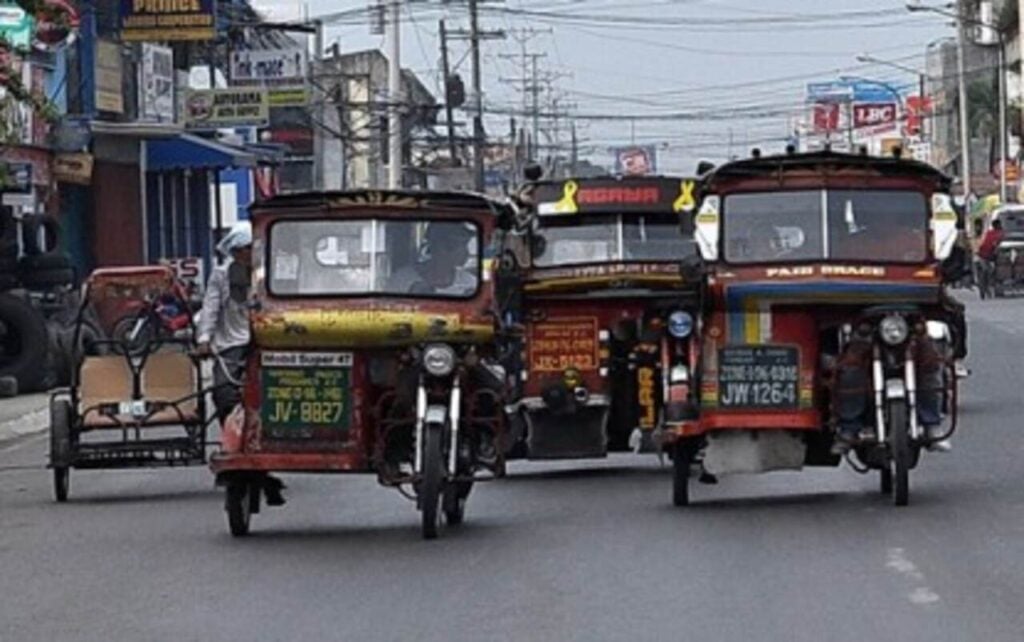
No. Tricycles are prohibited from operating on national highways in the Philippines due to long-standing safety rules from the LTO, DOTr, and later reinforced by the DILG through multiple memorandums and updates. They are only allowed on local roads unless an LGU creates a specific exception when no other route exists. The rule is meant to protect drivers, passengers, and everyone on the road.

This guide explains why the ban exists, the legal basis behind it, the penalties involved, and what tricycle drivers should do to stay safe and compliant.

can tricycles use national highways philippines

Why Tricycles Cannot Operate on National Highways

can-tricycle-use-national-highways
Photo credit: PNA

The ban is not new. It has been in place since LTO Memorandum Circular 94-1994, which clearly states that tricycles are not allowed on national highways used by four-wheel vehicles over 4 tons and where normal speeds exceed 40 kph.

This rule was issued by the Department of Transportation (then DOTC) and the LTO.

It also allows:

  • The Sangguniang Bayan or Sangguniang Panlungsod to issue exceptions only when no alternative route exists.

Note: This memo is the main legal basis for the ban.

This rule is also repeatedly echoed in various rules and memoranda: 

1. DILG and DOTr/DOTC Joint Memorandums (2007–2023)

The DILG repeatedly reiterated the same rule, not because it created the policy, but because LGUs were not enforcing it. These include:

  • DILG MC 2007-01
  • DILG–DOTC Joint MC 01 s. 2008
  • DILG MC 2011-68
  • DILG–DOTR/LTO Joint MC 001 s. 2017
  • DILG MC 2020-004
  • DILG MC 2020-036
  • DILG MC 2020-145
  • DILG Memorandum dated October 21, 2022
  • DILG MC 2023-195

All these repeat the same safety requirement:

  • Tricycles are not allowed on national highways where heavy vehicles pass and driving speeds exceed 40 kph.

2. DILG Memorandum Circular 2023-195 (Latest Reiteration)

This memo “reinforces” the prohibition because:

  • Many LGUs still allow tricycles on highways
  • There are still many accidents involving tricycles on high-speed roads

It directs LGUs to:

  • Update their Tricycle Route Plans
  • Assign alternative roads
  • Install signages
  • Impose penalties
  • Coordinate with PNP
  • Hold consultations with tricycle groups
  • Consider exceptions only as a last resort

This memo does not create a new ban—it only reminds LGUs to enforce the old LTO rule.

3. Metro Manila Traffic Code of 2023

Section 16, Article II also:

  • Prohibits tricycles on national highways within the NCR

This matches the LTO 94-1994 standard.

4. Republic Act 4136 (Land Transportation and Traffic Code)

While RA 4136 does not explicitly mention tricycles on highways, it provides the safety authority for:

  • Setting weight limits
  • Setting speed limits
  • Regulating vehicles allowed on public highways

This law serves as the legal foundation for the LTO and DOTr to restrict certain vehicles (like tricycles) from dangerous road environments.

5. Authority of Local Governments (Local Government Code of 1991)

Sections 447(3)(VI) and 458(3)(VI) give LGUs the power to regulate tricycles, BUT:

  • LGUs must follow DOTC/DOTr/LTO guidelines
  • Tricycle operations must comply with national rules
  • Exceptions can only be made when no alternative route exists

Main Reasons for the Ban

Some of the main reasons cited for this prohibition include:

  • Safety risks: Tricycles move slower and are smaller than most highway vehicles. This speed difference increases the chances of severe accidents.
  • Heavy and fast traffic: Highways carry large vehicles (buses, trucks, private cars) that travel beyond 40 kph, creating unsafe conditions for tricycles.
  • Accident data: In 2022 alone, Metro Manila recorded 2,241 tricycle-related road accidents.

Penalties for Tricycles Using National Highways

Drivers often get confused, so here is the straightforward breakdown:

  • First offense: ₱1,000
  • Fourth offense: ₱5,000 or 1 month imprisonment or both, depending on the court

Some LGUs may also suspend or revoke the MTOP (Motorized Tricycle Operator’s Permit).

Are There Exceptions?

Yes—but they are very specific.

The Sangguniang Bayan or Sangguniang Panlungsod may allow tricycles on a portion of a national highway only if there is absolutely no alternative route.

Even then, the LGU must create an ordinance and enforce safety measures in the outermost lane.

How LGUs Must Enforce the Policy

Local governments are required to:

  • Form or update their Tricycle Task Force
  • Draft or update the Tricycle Route Plan including:
    • schematic maps
    • signages and safety markings
    • info campaigns
    • color schemes or emblems for tricycles allowed on routes touching highways
    • penalties for violators
  • Coordinate with the Local Public Transport Route Plan team
  • Conduct consultations with drivers and barangays
  • Set minimum operating conditions for MTOP/POP
  • Develop long-term alternative routes or infrastructure
  • Consider exceptions only when no alternative roads exist
  • Work with the PNP for enforcement

What Tricycle Drivers Should Do

To stay compliant and avoid penalties, tricycle drivers must:

  • Stick to local roads. Tricycles are meant for local routes only.
  • Check your LGU’s route plan. Some areas have updated maps showing exactly where tricycles can and cannot pass.
  • Follow local ordinances. LGUs may have additional rules on franchises, roadworthiness, and routes.
  • Report unclear or confusing routes. Your municipal or city hall can clarify designated tricycle paths.

If you see violations you should report them to your LGU, barangay, or PNP for everyone’s safety.

error: Content is protected !!