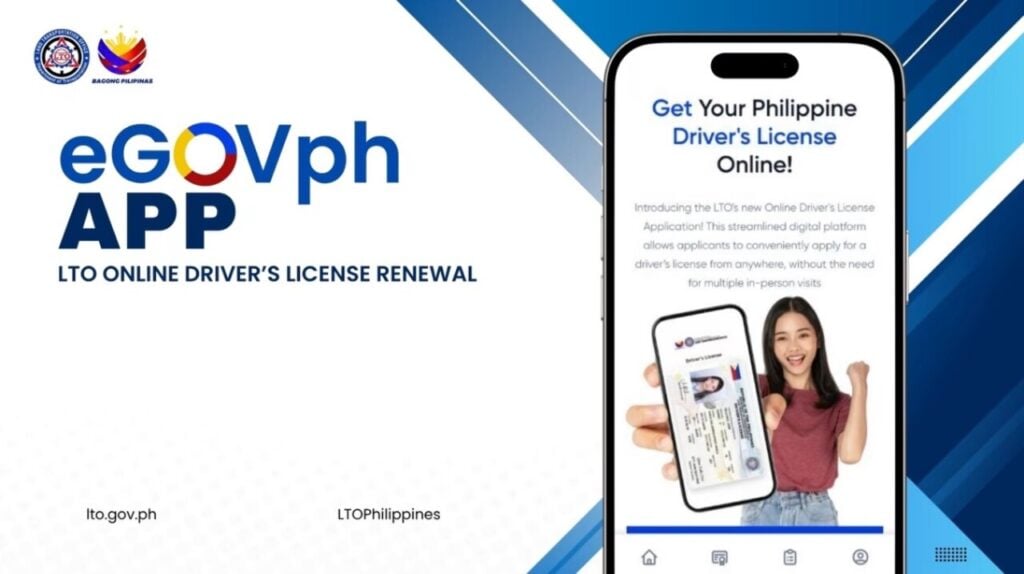
Renewing your driver’s license (DL) can now be done online via the eGovPH app. This means that motorists can now complete the entire license renewal process digitally—submitting requirements, paying fees, and receiving their updated license—without ever visiting an LTO office, thanks to the Philippine government’s push to shift public transactions to digital platforms for easier, faster, and more transparent government services. By integrating license renewal into the eGovPH app, the Land Transportation Office (LTO) aims to reduce queues, prevent fixer-related scams, and make services more accessible nationwide, while at the same time, helping the people save time, minimize transportation costs, and provide a valid electronic driver’s license (eDL) directly through a smartphone.
If you’re a Filipino motorist looking for a faster and more convenient way to renew your driver’s license, then you can now do so using your smartphone. In this guide, you’ll learn step-by-step how to renew your driver’s license online using the eGovPH app, including pre-requisite requirements, payment methods, and what to expect after submission.
The eGovPH driver’s license renewal is designed to offer a mobile-first experience via the government superapp, eGovPH. It was meant to be an all-in-one mobile service via the app, allowing users to upload license details, complete pre-requirements, pay fees, and access their electronic license within a single smartphone application interface. Unlike the LTMS portal, it doesn’t require accessing a website through a browser with separate steps for profile creation, medical and ODEP certificate uploads, and payment processing spread across different sections. Instead, the eGovPH app centralizes the process into a more streamlined, app-based platform specifically optimized for mobile use. The app also integrates optional delivery booking for the physical license card directly through the app, while the LTMS portal typically requires manual follow-up or separate courier arrangements, making it a more convenient and accessible option for mobile users as well as ordinary citizens who prefer handling transactions via smartphone rather than through web browsers or physical offices.
Through this system, license holders can apply for renewal, upload requirements, pay fees, and even get an electronic version of their eDL without physically going to an LTO office.
Why Renew Online?
According to LTO Chief Asec. Vigor D. Mendoza II, the integration of driver’s license renewal into the eGovPH app is meant to provide a faster and more convenient process, eliminating the need for transportation expenses and long lines at LTO offices.
“This is a better alternative for going to LTO offices since you don’t need to shell out money for transportation or wait in queues,” Mendoza said.
Transport Secretary Vince Dizon added that this helps prevent applicants from falling victim to fixers and streamlines the government’s push for safer, transparent public service.
Benefits
Some of the benefits of going for DL renewal via the eGovPH app includes:
Convenient, app-based driver’s license renewal using a smartphone
Elimination of in-person visits and queuing at LTO offices
Reduced risk of dealing with fixers or unauthorized agents
Faster processing and real-time status updates via SMS and in-app notifications
Access to a valid electronic driver’s license (eDL) through the app
Integrated payment system with multiple payment gateway options
Optional home delivery service for the physical driver’s license card
Centralized access to other government services beyond LTO within the same app
Simplified renewal process suitable for Filipinos living abroad or in remote areas
Support for the national digitization program promoting transparent and efficient public service
Who Can Renew Online Using eGovPH?
The eGovPH app is open to all Filipino drivers with an existing valid or expired license. However, those with licenses expired for over two years or with outstanding penalties may be required to process renewal manually through an LTO branch.
Requirements
Before starting your online application, make sure you have the following:
Online Driving Enhancement Program (ODEP) Certificate
Confirm that all uploaded documents and personal details are accurate.
Tap Submit.
Step 6: Pay the Renewal Fee
Choose from available payment gateways inside the app.
Settle the applicable renewal fee online.
Step 7: Confirmation and Delivery Options
Wait for an SMS confirmation from the LTO once your renewal is successful.
You will also receive another message once your renewal is approved.
Choose to either:
Pick up your new license at the nearest LTO branch, or
Book delivery directly to your home.
What Happens After You Submit?
Your driver’s license renewal is processed digitally.
An electronic driver’s license (eDL) becomes available inside the eGovPH app. This is valid and recognized like the physical license card.
The physical license can be delivered or picked up according to your preference.
Where to Apply
Using your smartphone, you may apply for your driver’s license renewal by downloading the eGovPH app either via the App Store or the Google Play Store. Then simply tap the NGA icon, select LTO, choose Online Driver’s Application, then click Renew Your Driver’s License. This should allow you to complete the entire process—from uploading your requirements to securing the pre-requirements, completing payments, and accessing both electronic and optional physical license delivery—all within the app.
Cost and Processing Timeline
Renewal via the eGovPH app follows the same fee structure as the LTMS portal: a standard on-time license renewal costs around ₱685 (₱100 application + ₱585 license fee), with added penalties (₱75–₱225) and a small computer processing charge if your license expired. The online application itself typically takes about 30 minutes once all requirements are in place, and you’ll receive your physical license either via pick‑up or courier—usually delivered within 72 hours, while your electronic version appears instantly in the app.
Video: Online DL Renewal via the eGovPH App
If you want a quick and hassle-free way to renew your license in the Philippines, using the eGovPH app is now one of the most accessible options. Watch this video and learn how you can take advantage of this convenient process for your next DL renewal!
The Land Transportation Office (LTO) has made its services more accessible by setting up branches inside major shopping malls across the Philippines. Most of the LTO in malls cater are labeled as DLRO or Driver’s License Renewal Offices. These mall-based LTO offices provide a faster, more convenient way for drivers and vehicle owners to process licenses, registrations, and other transactions without the hassle of traveling to far or crowded district offices.
The LTO branches in shopping malls not only offer convenience, but it also allows drivers and vehicle owners to complete their transactions while enjoying the comfort and accessibility of mall locations or combining it with other errands like shopping, dining, or paying bills in one trip. If you think you would prefer to go through one of them for your next LTO transaction, then this guide is for you.
Below is a comprehensive list of LTO branches in malls in different regions, complete with their addresses, contact details, and operating hours to guide you in planning your visit. Take note that this is based on our research checking the offices in malls. LTOPortal.PH is the original writer of this content.
Region 1
LTO DLRO CB Mall Urdaneta Center
Agency Code: 0143 Name of Agency: CB Mall Urdaneta Driver’s Licensing Renewal Office Office Address: Nancayasan, Urdaneta City, Pangasinan Official Number: 075-2049885 Official Email Address: r1ltodlrocbmall@gmail.com Operating Hours: Monday to Friday (9AM – 5PM)
Region 2
LTO Aritao Extension Office
Agency Code: 0210 Name of Agency: Aritao Extension Office Office Address: Aritao Growth Center, Banganan, Aritao, Nueva Vizcaya Official Number: 09266474297 Official Email Address: aritaoeo@gmail.com Operating Hours: Monday to Friday (8AM – 5PM)
Region 3
LTO DLRO Balagtas Town Center
Agency Code: 0310 Name of Agency: DLRO Balagtas Town Center Office Address: 2nd Floor Balagtas Town Center, McArthur Highway, Balagtas, Bulacan Official Number: 0991-9699764 Official Email Address: dlrobalagtas@gmail.com Operating Hours: Monday to Friday (8AM – 5PM)
LTO DLRO Robinsons Starmills
Agency Code: 0381 Name of Agency: DLRO Robinsons Starmills Office Address: Level 2, Robinsons Starmills, City of San Fernando, Pampanga Official Number: 045-457-6978 Official Email Address: dlro.robinsons.pampanga.@gmail.com Operating Hours: Monday to Friday (8AM – 5PM)
LTO DLRO Robinsons Malolos
Agency Code: 0354 Name of Agency: DLRO Robinsons Malolos Office Address: Level 4, Robinsons Place, Malolos, Bulacan Official Number: 044-305-4120 Official Email Address: 0354ddmpao@gmail.com Operating Hours: Monday to Friday (10AM – 6PM)
LTO DLRC SM Clark
Agency Code: 0398 Name of Agency: DLRC SM Clark Office Address: G/F 168 SM City Clark, M.A. Roxas Hiway, Brgy.Malabanias, Angeles City Official Number: (045) 499 4316 Official Email Address: ltodlrosmclark@gmail.com Operating Hours: Monday to Friday (10AM – 5PM)
LTO DLRO SM Pulilan
Agency Code: 0357 Name of Agency: DLRO SM Pulilan Office Address: SM Pulilan, Sto. Cristo, Pulilan, Bulacan Official Number: 9692606054 Official Email Address: dlrosmpulilan@gmail.com Operating Hours: Monday to Friday (10AM – 10PM)
LTO DLRO SM San Jose Del Monte
Agency Code: 0383 Name of Agency: DLRO SM San Jose Del Monte Office Address: Basement 2, SM City San Jose Del Monte, Quirino Hiway, San Jose Del Monte City, Bulacan Official Number: 0995-9416222 Official Email Address: 0383ddmpao@gmail.com Operating Hours: Daily (10AM – 10PM)
LTO DLRO SM Telabastagan
Agency Code: 0355 Name of Agency: DLRO SM Telabastagan Office Address: 2nd Floor, Near Cinemas, SM City Telabastagan, City of San Fernando, Pampanga Official Number: (0968) 288 1976 Official Email Address: 0355dlrosmtelabastagan@gmail.com Operating Hours: Monday to Friday (10AM – 5PM) Facebook: https://www.facebook.com/DLROSMTelabastagan/
LTO Angeles Extension Office
Agency Code: 0382 Name of Agency: Angeles Extension Office Office Address: 3F Marquee Mall, Angeles City, Pampanga Official Number: (045) 304 7516 Official Email Address: aeomarqueemall@gmail.com, 0382angelesEO@gmail.com Operating Hours: Monday to Friday (9AM – 5PM)
LTO DLRO Vista Mall Bataan
Agency Code: 0370 Name of Agency: DLRO Vista Mall Bataan Office Address: 2nd Floor Vista Mall, Cupang Proper, Balanga, Bataan Official Number: 9605942712 Official Email Address: bataandlro@gmail.com Operating Hours: Monday to Friday (8AM – 5PM) Facebook: https://www.facebook.com/profile.php?id=6156556328063
LTO Tarlac Licensing Center
Agency Code: 0392 Name of Agency: Tarlac Licensing Center Office Address: 3F Metrotown Mall, Sto. Cristo, Tarlac City Official Number: (045) 456-0250 Official Email Address: 0392ddmpao@gmail.com Operating Hours: Monday to Friday (8AM – 5PM) Facebook: https://www.facebook.com/p/LTO-Tarlac-Licensing-Center-100061089604555/
LTO Mabalacat Extension Office
Agency Code: 0336 Name of Agency: Mabalacat Extension Office Office Address: 2F Marina Arcade, Dau, Mabalacat, Pampanga Official Number: 0949-304-9888 Official Email Address: 0336ddmpao@gmail.com Operating Hours: Monday to Friday (9AM – 5PM)
LTO Sta. Ana Extension Office
Agency Code: 0329 Name of Agency: Sta. Ana Extension Office Office Address: M&L Business Complex, San Bartolome, Sta. Ana, Pampanga Official Number: 9081828042 Official Email Address: staanaextensionoffice@gmail.com Operating Hours: Monday to Friday (8AM – 5PM)
Region 4-A
LTO DLRO Southwoods Mall
Agency Code: 0442 Name of Agency: DLRO Southwoods Office Address: 3rd Floor Southwoods Mall, Brgy. San Francisco, Biñan, Laguna Official Number: 0945-680-7924 Official Email Address: d46ltosouthwoods@gmail.com Operating Hours: Daily (10AM – 9PM) Facebook: https://www.facebook.com/ltosouthwoods/
LTO DLRO Lemery
Agency Code: 0443 Name of Agency: DLRO Lemery Office Address: Ground Flr. Xentromall Bldg. Brgy. Malinis Lemery, Batangas Official Number: (043) 341-7476 Official Email Address: dlroxentromall@gmail.com Operating Hours: Monday to Friday (8:30AM – 5PM) Facebook: https://www.facebook.com/p/Lto-Dlro-Xentromall-Lemery-100082871402534/
LTO Bacoor District Office
Agency Code: 0412 Name of Agency: Bacoor District Office Office Address: Revilla Business Park Brgy. Habay II Bacoor City, Cavite Official Number: (046) 471-1604 Official Email Address: 0412.ltobacoordo@gmail.com Operating Hours: Monday to Friday (10AM – 5PM) Facebook: https://www.facebook.com/p/LTO-Bacoor-District-Office-0412-100063831204009/?_rdr
LTO Carmona District Office
Agency Code: 0430 Name of Agency: Carmona District Office Office Address: Verdants Square Governors Drive Brgy Mabuhay Carmona Cavite Official Number: (046) 433 3492 Official Email Address: 0430carmonado@gmail.com Operating Hours: Monday to Friday (8AM – 5PM) Facebook: https://www.facebook.com/LTOCarmonaOneStopShop/?_rdr
LTO DLRO Imus
Agency Code: 0413 Name of Agency: DLRO Imus Office Address: 3rd Floor, Robinson’s Place Imus, Tanzang Luma V, Imus City, Cavite Official Number: 0954 150 1762 Official Email Address: dlroimus0413@gmail.com Operating Hours: Monday to Friday (10AM – 5PM) Facebook: https://www.facebook.com/profile.php?id=61559894443942
LTO DLRO SM Trece Martires
Agency Code: 0431 Name of Agency: DLRO SM Trece Martires Office Address: Basement SM City Trece Martires Capitol Compound Trece Martires, Cavite Official Number: (046) – 894-8335 Official Email Address: 0431dlrosmcitytrece@gmail.com Operating Hours: Monday to Saturday (10AM – 5PM)
LTO Cabuyao District Office
Agency Code: 0420 Name of Agency: Cabuyao District Office Office Address: Areza Town Center, Brgy Canlalay, Biñan, Laguna Official Number: (0906) 878 4513 Official Email Address: 0420ltocabuyaodo@gmail.com Operating Hours: Monday to Saturday (8AM – 5PM)
LTO DLRO Sta Rosa
Agency Code: 0421 Name of Agency: DLRO Sta Rosa Office Address: 3rd Floor, Robinson’s Market, Sta. Rosa, Laguna Official Number: (049)-535-3209 Official Email Address: dlrobinsonsstarosa@gmail.com Operating Hours: Monday to Friday (10AM – 5PM)
LTO Taal District Office
Agency Code: 0492 Name of Agency: Taal District Office Office Address: Taal Sports Complex Brgy. Tierra Alta, Taal, Batangas Official Number: (043) 740 4039, 0919819544 Official Email Address: 0492taaleo@gmail.com Operating Hours: No listed business hours Facebook: https://www.facebook.com/TaalExtensionOffice/
LTO DLRO Lipa
Agency Code: 0446 Name of Agency: DLRO Lipa Office Address: 2nd flr. Robinsons Place, Brgy. Mataas Na Lupa, Lipa City, Batangas Official Number: 9273882403 Official Email Address: dlrolipa@gmail.com Operating Hours: No listed business hours
LTO DLRO Batangas
Agency Code: 0417 Name of Agency: DLRO Batangas Office Address: Ground Floor, SM City Batangas, Pallocan West, Batangas City, Batangas Official Number: (043)311-1876 Official Email Address: 0417dlrobatangas@gmail.com Operating Hours: Monday to Saturday, except every 3rd Saturday (10AM – 6PM)
LTO Cainta Extension Office
Agency Code: 0488 Name of Agency: Cainta Extension Office Office Address: Bazaar City 9GMC Compound, Felix Ave. Brgy. Sto. Domingo, Cainta Rizal Official Number: 0917 515 5081 Official Email Address: ltocaintarecordsection@gmail.com Operating Hours: Monday to Friday (8AM – 5PM) Facebook: https://www.facebook.com/p/LTO-Cainta-Extension-Office-R4A-61578328450368/
LTO DLRO Cainta
Agency Code: 0423 Name of Agency: DLRO Cainta Office Address: 3rd Floor Robinsons Place Brgy Sto Domingo, Cainta, Rizal Official Number: 9059481348 Official Email Address: 0423dlrccainta@gmail.com Operating Hours: Monday to Friday (10AM – 5PM)
LTO DLRO San Mateo
Agency Code: 0491 Name of Agency: DLRO San Mateo Office Address: 3rd Floor, SM City San Mateo, Gen. Luna St., Ampid 1, San Mateo, Rizal Official Number: 09757527733, 09705373326, 09777528299 Official Email Address: 0491dlrosanmateo@gmail.com Operating Hours: Monday to Friday (9AM – 5PM) Facebook: https://www.facebook.com/p/LTO-Sm-City-San-Mateo-Rizal-DLRO-61559666593059/
LTO DLRO Antipolo
Agency Code: 0406 Name of Agency: DLRO Antipolo Office Address: Lingkod Pinoy Center, 2nd level Robinson’s Place, Brgy Dela Paz, Antipolo City, Rizal Official Number: 09175522844, 0285118957 Official Email Address: 0406dlroantipolo@gmail.com Operating Hours: Monday to Friday (8AM – 5PM)
LTO DLRO Montalban
Agency Code: 0490 Name of Agency: DLRO Montalban Office Address: Unit L2-106-108 2nd floor Montalban Town Center, San Jose Rodriguez, Rizal Official Number: 9773066963 Official Email Address: 0490ltodlromontalban@gmail.com Operating Hours: Monday to Friday (8AM – 5PM) Facebook: https://www.facebook.com/ltodlromontalban/
LTO Lucena District Office
Agency Code: 0452 Name of Agency: Lucena District Office Office Address: Lucena Grand Central Terminal, Brgy. Ilayang Dupay, Lucena City Official Number: (042) 373-0541 Official Email Address: 0452LucenaDO@gmail.com Operating Hours: Monday to Friday (8AM – 5PM) Facebook: https://www.facebook.com/LTOLucena/
LTO Lucena City Licensing Center
Agency Code: 0464 Name of Agency: Lucena City Licensing Center Office Address: Lucena Grand Central Terminal, Brgy. Ilayang Dupay, Lucena City Official Number: 9386216313 Official Email Address: 0464quezonlc@gmail.com Operating Hours: Monday to Friday (8AM – 5PM) Facebook: https://www.facebook.com/LucenaLC/
LTO DLRO Lucena
Agency Code: 0453 Name of Agency: DLRO Lucena Office Address: 3rd flr SM City Lucena, Maharlika highway cor Dalahican road, Ibabang Dupay Lucena City Official Number: 9171579532 Official Email Address: smlucenadlro@gmail.com Operating Hours: Monday to Friday (9AM – 6PM) Facebook: https://www.facebook.com/p/LTO-DLRO-SM-Lucena-100077368755484/
Region 4-B
LTO Palawan Extension Office
Agency Code: 0465 Name of Agency: Palawan Extension Office Office Address: Robinson’s Place., Puerto Princesa City, Palawan Official Number: 9173111125 Official Email Address: ltopalawan0465@gmail.com Operating Hours: Monday to Friday (8AM – 5PM)
Region 5
LTO Legazpi District Office
Agency Code: 0524 (E02) Name of Agency: Legazpi District Office Office Address: Embarcadero de Legazpi, Leg.Blvrd., Legazpi City, Albay Official Number: 0906-447-7053 Official Email Address: legazpi0524@gmail.com Operating Hours: Monday to Friday (8AM – 5PM)
Region 6
LTO Iloilo DLRC
Agency Code: 0626 Name of Agency: Iloilo Drivers’ License Renewal Center Office Address: Robinsons Place, Iloilo City Official Number: 09273105866 Official Email Address: rvcichon@gmail.com Operating Hours: Monday to Friday (9AM – 5PM)
LTO Pavia DLRC
Agency Code: 0617 Name of Agency: Pavia Drivers’ License Renewal Center Office Address: GT Town Center, Pavia, Iloilo Official Number: 9354166035, 09509158732 Official Email Address: jonastorres0730@gmail.com Operating Hours: Daily (9AM – 8PM)
LTO Festive Walk Mall Megaworld DLRC
Agency Code: 0627 Name of Agency: Festive Walk Mall Megaworld Drivers’ License Renewal Center Office Address: Festive Walk Mall Megaworld, Mandurriao, Iloilo City Official Number: 09171525756 Official Email Address: dlrofestivemalliloilo@gmail.com Operating Hours: Monday to Friday (8AM – 5PM) Facebook: https://www.facebook.com/p/LTO-DLRO-Festive-Walk-Mall-Iloilo-City-61576249906700/?_rdr
LTO Robinsons Place Bacolod City DLRC
Agency Code: 0605 Name of Agency: Robinsons Place Bacolod City Drivers’ License Renewal Center Office Address: Robinsons Place, Bacolod City Official Number: 09286045283 Official Email Address: nathanielsuela@gmail.com Operating Hours: Monday to Friday (8AM – 5PM) Facebook: https://www.facebook.com/p/LTO-DLRO-Robinsons-Bacolod-61555790315133/
LTO Ayala Mall- Bacolod City DLRC
Agency Code: 0631 Name of Agency: Ayala Mall- Bacolod City Drivers’ License Renewal Center Office Address: Ayala Mall, Bacolod City Official Number: 09517822133 Official Email Address: dlroayalacapit@gmail.com Operating Hours: Monday to Friday (8AM – 5PM) Facebook: https://www.facebook.com/profile.php?id=61561901817924
Region 7
LTO RO Licensing Extension (Malasakit)
Agency Code: 0702 Name of Agency: RO Licensing Extension (Malasakit) Office Address: Piazza Elesia, Gov. M. Cuenco Ave., Talamban, Cebu City, Cebu 6000 Official Email Address: r7malasakitlc@gmail.com Operating Hours: Monday to Friday (8AM – 5PM) Facebook: https://www.facebook.com/profile.php?id=61558628982624
LTO Cebu City District Office
Agency Code: 0716 Name of Agency: Cebu City District Office Office Address: 4th Flr. Robinsons Galleria, General Maxilom Avenue Corner Sergio Osmeña Extension, Brgy. Tejero, Cebu City Official Email Address: lto7cebucitydo@gmail.com Operating Hours: Monday to Friday (10AM – 6PM)
LTO Cebu City Licensing Center
Agency Code: 0720 Name of Agency: Cebu City Licensing Center Office Address: SM Seaside, South Road Properties, Mambaling, Cebu City Official Email Address: lto7ccmlc@gmail.com Operating Hours: Monday to Friday (9:30AM – 6:30PM)
LTO DLRO Robinsons Mall Fuente Cebu
Agency Code: 0717 Name of Agency: DLRO Robinsons Mall Fuente Cebu Office Address: Level 3, Robinsons Fuente, Fuente Osmeña Circle, Cebu City Official Email Address: ltorobinsonsfuente@gmail.com Operating Hours: Monday to Friday (10AM – 5PM)
LTO DLRO SM City Cebu
Agency Code: 0722 Name of Agency: DLRO SM City Cebu Office Address: SM City, North Reclamation Area, Cebu City Official Email Address: r07smdlro0722@gmail.com Operating Hours: Monday to Friday (10AM – 6PM)
LTO Lapu-Lapu City Licensing Center
Agency Code: 0727 Name of Agency: Lapu-Lapu City Licensing Center Office Address: 3rd Floor Island Central Mall, Ibo Lapu-Lapu City Official Number: (032) 413 0632 Official Email Address: 0727lapulcsupply@gmail.com Operating Hours: Monday to Friday (10AM – 7PM)
LTO Mandaue City District Office
Agency Code: 0732 Name of Agency: Mandaue City District Office Office Address: 3rd Flr. City Time Square 2, Tipolo Mandaue City, Cebu Official Email Address: r7mandauecitydo0732@gmail.com Operating Hours: Monday to Friday (8AM – 5PM)
LTO Mandaue City Licensing Center
Agency Code: 0736 Name of Agency: Mandaue City Licensing Center Office Address: 3rd Flr. City Time Square 2, Tipolo Mandaue City, Cebu Official Email Address: ltomandauelc0736@gmail.com Operating Hours: Monday to Friday (8AM – 4PM)
LTO Consolacion District Office
Agency Code: 0762 Name of Agency: Consolacion District Office Office Address: 2nd Flr., SM Consolacion, Consolacion, Cebu Official Email Address: 0762consolacioneo@gmail.com Operating Hours: Monday to Friday (9AM – 6PM)
LTO Tagbilaran City DO Licensing Extension (Alturas Mall)
Agency Code: 0761 Name of Agency: Tagbilaran City DO Licensing Extension (Alturas Mall) Office Address: Alturas Mall, Tagbilaran City Official Number: (038) 427 5221 Official Email Address: 0761tagbilarancityeo@gmail.com Operating Hours: Monday to Friday (9AM – 6PM)
LTO DLRO Tagbilaran City (Island City Mall)
Agency Code: 0749 Name of Agency: DLRO Tagbilaran City (Island City Mall) Office Address: Island City Mall, Tagbilaran City, Bohol Official Email Address: icmdlro2022@gmail.com Operating Hours: Monday to Friday (8AM – 5PM)
Region 8
As of writing, there are no LTO branches in malls listed for this region.
Region 9
LTO DLRC Yubengco Mall
Agency Code: 0927 Name of Agency: DLRC Yubengco Mall Office Address: Yubengco Star Mall, Putik Zambo. City Official Number: 9165191589 Official Email Address: ebeyian@yahoo.com Operating Hours: No listed business hours
LTO DLRO KCC Mall
Agency Code: 0931 Name of Agency: DLRO KCC Mall Office Address: KCC Mall, Governor Camins, Zambo. City Official Number: 9976439873 Official Email Address: manyhang572@gmail.com Operating Hours: Monday to Friday (9AM – 5PM)
LTO Tetuan Extension Office
Agency Code: 0925 Name of Agency: Tetuan Extension Office Office Address: L ‘ Arcadia Complex, Tetuan, Zamboanga City Official Number: 9176515217 Official Email Address: lto9tetuan@gmail.com Operating Hours: Monday to Friday (8AM – 5PM)
LTO Dapitan Extension Office
Agency Code: 0911 Name of Agency: Dapitan Extension Office Office Address: Gloria de Dapitan, Dawo, Dapitan City Official Number: 9972866820 Official Email Address: ltodapitan01@gmail.com Operating Hours: No listed business hours Facebook: https://www.facebook.com/p/LTO-Dapitan-City-Extension-Office-61573494128088/
LTO New Registration unit
Agency Code: 901 Name of Agency: New Registration unit Office Address: ZamboEcozone, San Ramon, Zamboanga City Official Number: 9363052727 Official Email Address: ltonewregr9@gmail.com Operating Hours: Monday to Friday (8AM – 5PM)
Region 10
LTO DLRC Limketkai Mall
Agency Code: 1007 Name of Agency: Driver’s License Renewal Center Office Address: Limketkai Mall, Lapasan, Cagayan De Oro City Official Number: (088) 856 3006, 0926 819 0622 Official Email Address: limketkai1007@gmail.com Operating Hours: Monday to Saturday (8:30AM – 4PM)
LTO SM City Cagayan DLRO
Agency Code: 1038 Name of Agency: SM City Driver’s License Renewal Office Office Address: 3rd Floor, SM Uptown, Upper Carmen, Cagayan De Oro City Official Number: (088) 859 3527 Official Email Address: 1038dlrosm@gmail.com Operating Hours: Monday to Friday (9AM – 6PM)
Region 11
LTO DLRO Tagum
Agency Code: 1138 Name of Agency: DLRO Tagum Office Address: Lower Ground Floor, Gaisano Mall of Tagum, Brgy. Magugpo East, City of Tagum Davao del Norte 8100 Official Number: 0908-444-6892, 0992-844-6892 Official Email Address: lto.dlrc.gaisano.mall.tagum.city@gmail.com Operating Hours: Monday to Friday (8AM – 5PM) Facebook: https://www.facebook.com/LTOGmalltagum/
LTO DLRO Buhangin
Agency Code: 1118 Name of Agency: DLRO Buhangin Office Address: Ground Floor, Gaisano Grand Citygate, Buhangin, Davao City Official Number: (082) 227-4295 Official Email Address: ltobuhangin18@gmail.com Operating Hours: Monday to Friday (8AM – 5PM) Facebook: https://www.facebook.com/p/LTO-XI-DLRO-Buhangin-61568442897861/
LTO DLRO Digos
Agency Code: 1137 Name of Agency: DLRO Digos Office Address: Lower Ground floor, Gaisano Mall of Digos, Brgy. Tres de Mayo, Digos City, Davao del Sur Official Number: (082) 553-1206 Official Email Address: dlrogmalldigos2018@gmail.com Operating Hours: Monday to Friday (8AM – 5PM) Facebook: https://www.facebook.com/p/LTO-XI-DLRO-Digos-61568435007822/
LTO DLRO Toril
Agency Code: 1139 Name of Agency: DLRO Toril Office Address: Ground Floor, Felcris Supermarket Toril, Crossing Bayabas, Davao City Official Number: (082) 225-8933, 0915-806-9442 Official Email Address: ltotorilrxi@gmail.com Operating Hours: Monday to Friday (8AM – 5PM)
Region 12
LTO DLRO SM City General Santos
Agency Code: 1213 Name of Agency: DLRO SM City General Santos Office Address: 3rd Level, SM City Gensan, L. Santiago Street, General Santos City Official Number: (083) 305-9168 Official Email Address: smltodlrogsc2021@gmail.com Operating Hours: Monday to Friday (8AM – 5PM) Facebook: https://www.facebook.com/profile.php?id=61577899943458#
LTO DLRO Robinson’s Place General Santos City
Agency Code: 1209 Name of Agency: DLRO Robinson’s Place General Santos City Office Address: Robinson’s Place, J. Catolico St., Lagao, General Santos City Official Number: (083) 553-1442 Official Email Address: dlrorobinsongensan@gmail.com Operating Hours: Monday to Friday (10AM – 5PM) Facebook: https://www.facebook.com/p/LTO-DLRO-Robinsons-Gensan-100080039464369/
LTO DLRO Gaisano Mall Koronadal City
Agency Code: 1227 Name of Agency: DLRO Gaisano Mall Koronadal City Office Address: Gaisano Grand Mall, Alunan Avenue,Koronadal City, South Cotabato Official Number: (083) 520-2612 Official Email Address: 1227dlrokoronadal@gmail.com Operating Hours: Monday to Friday (8AM – 5PM) Facebook: https://www.facebook.com/p/LTO-DLRO-Koronadal-100063994483221/
NCR Region
LTO DLRO Alabang Town Center
Agency Code: 1385 N40 Name of Agency: DLRO Alabang Town Center Office Address: Space 1141, Entertainment Complex, Ayala Alabang Town Center, Muntinlupa City Official Number: 8541-0189 Official Email Address: dlroalabang@gmail.com Operating Hours: Monday to Saturday (8AM – 5PM)
LTO DLRO Ali Mall
Agency Code: 1383 Name of Agency: DLRO Ali Mall Office Address: 2nd Floor, Government Center, Ali Mall, Cubao Official Number: (+63) 930-726-1229 Official Email Address: dlroalimall@gmail.com Operating Hours: Monday to Friday (10AM – 5:30PM)
LTO DLRO Araneta Square Mall
Agency Code: 1305 N31 Name of Agency: DLRO Araneta Square Mall Office Address: F-16 Araneta Square, Bonifacio Monumento, Samson Rd Brgy 76 Dist 2, Caloocan City Official Number: 8-9270634 Official Email Address: zuniga.roman@gmail.com Operating Hours: Monday to Friday (9AM – 4:30PM)
LTO DLRO Ayala Circuit Mall
Agency Code: 1354 N67 Name of Agency: DLRO Ayala Circuit Mall Office Address: 3rd Level Ayala Circuit Mall Hipodromo St. Carmona Makati City Official Number: (02)82880709 Official Email Address: ayalamallscircuitdlro@gmail.com Operating Hours: Monday to Saturday (9AM – 6PM)
LTO DLRO California Garden Square
Agency Code: 1803 Name of Agency: DLRO California Garden Square Office Address: Unit R20-21 Anaheim Cluster, California Garden Square, DM Guevarra, Highway Hills, Mandaluyong City Official Number: (02)88006425 Official Email Address: ltodlrocgs@gmail.com Operating Hours: Monday to Friday (9AM – 5PM)
LTO DLRO Eastwood
Agency Code: 1805 Name of Agency: DLRO Eastwood Office Address: 3rd Floor Cyber and Fashion Mall Eastwood Bagumbayan, Quezon City Official Number: 0977-692-6924 Official Email Address: ltodlroe@gmail.com Operating Hours: Monday to Saturday (8AM – 5PM)
LTO DLRO Estancia
Agency Code: 1807 Name of Agency: DLRO Estancia Office Address: 4th Floor, East Wing, Estancia Mall, Oranbo, Pasig City Official Number: 0962-317-3548 Official Email Address: dlroestancia1807@gmail.com Operating Hours: Monday to Friday (9AM – 5PM) Facebook: https://www.facebook.com/dlroestancia1807/
LTO DLRO Ever Gotesco Commonwealth
Agency Code: 1362 Name of Agency: DLRO Ever Gotesco Commonwealth Office Address: 2nd Floor, Ever Gotesco Mall, Commonwealth, Quezon City Official Number: 0963-293-6669 Official Email Address: i3628888@gmail.com Operating Hours: No listed business hours
LTO DLRO Fishermall Q. Ave
Agency Code: 1359 Name of Agency: DLRO Fishermall Q. Ave Office Address: Upper Basement Fishermall, Quezon Avenue, Quezon City Official Number: 9568408485 Official Email Address: ncrdlrofishermall1359@gmail.com Operating Hours: Monday to Friday (9AM – 6PM), Saturday (8AM – 5PM) Facebook: https://www.facebook.com/ltodlrofishermall/
LTO DLRO Fishermall Malabon
Agency Code: 1315 N77 Name of Agency: DLRO Fishermall Malabon Office Address: 5th Floor Fisher Mall Malabon, Brgy Longos, Malabon City Official Number: 8706-4070 Official Email Address: 1315fishermallmalabon@gmail.com Operating Hours: Monday to Friday (9AM – 6PM) Facebook: https://www.facebook.com/p/LTO-DLRO-Fisher-Mall-Malabon-100083033537517/
LTO DLRO Guadalupe
Agency Code: 1331 N33 Name of Agency: DLRO Guadalupe Office Address: U/L MRT Guadalupe Comm’l Complex EDSA Guadalupe Nuevo Makati City Official Number: 85411129 Official Email Address: 1331gulpe8888@gmail.com Operating Hours: Monday to Friday (9AM – 5PM)
LTO DLRO Lucky Chinatown Mall
Agency Code: 134 N41 Name of Agency: DLRO Lucky Chinatown Mall Office Address: 3/F Lucky Chinatown Mall – Annex B, Reina Regente St., corner Dela Reina St., Binondo Manila Official Number: (02) 797-181-87/ 0917-189-8966 Official Email Address: Buquironcatherine22@gmail.com Operating Hours: Monday to Friday (9AM – 6PM)
LTO DLRO Metropoint Pasay
Agency Code: 1369 N38 Name of Agency: DLRO Metropoint Pasay Office Address: 4th Floor Metropoint Mall Edsa Corner Taft, Pasay City Official Number: 88100262 Official Email Address: dlrometropointdmpao@gmail.com Operating Hours: Monday to Friday (9AM – 5PM) Facebook: https://www.facebook.com/metropoint.dlro/
LTO DLRO Paseo Center Makati
Agency Code: 132 N55 Name of Agency: DLRO Paseo Center Makati Office Address: 3rd Floor Paseo Center, Sedeño street corner Paseo de Roxas Avenue, Salcedo Village, Brgy. Bel Air, Makati City, 1209 Official Number: (02)8292-2255 Official Email Address: concerns.dlropaseo@gmail.com Operating Hours: Monday to Friday (9AM – 5PM)
LTO DLRO Robinsons Galleria
Agency Code: 1338 Name of Agency: DLRO Robinsons Galleria Office Address: Lower Level Robinsons Galleria Ortigas Avenue, Ugong Quezon City Official Number: 86321703 Official Email Address: 1338dlrorobgalleria@gmail.com Operating Hours: Monday to Friday (9AM – 5PM) Facebook: https://www.facebook.com/ltorobinsonsgalleria/
LTO DLRO Robinsons Metroeast
Agency Code: 1357 Name of Agency: DLRO Robinsons Metroeast Office Address: Robinsons Metro East Mall Basement Level, Brgy, Dela Paz, Pasig City Official Number: 0928-359-6090 Official Email Address: 1357ddmpao@gmail.com Operating Hours: Monday to Friday (9AM – 6PM)
LTO DLRO Robinsons Novaliches
Agency Code: 1365 Name of Agency: DLRO Robinsons Novaliches Office Address: U118 Lvl 3, Robinson’s Novaliches, Quirino Highway, Pasong Tamo, Quezon City Official Number: 0969-241-1323 Official Email Address: dlrorobinsonsnovaliches1365@gmail.co m Operating Hours: Monday to Friday (10AM – 5PM) – Temporarily Closed
LTO DLRO Robinsons Las Piñas
Agency Code: 1325 N47 Name of Agency: DLRO Robinsons Las Piñas Office Address: Lingkod Pinoy Basement Area, Robinson’s Place Las Piñas, Alabang Zapote Road, Talon Uno, Las Piñas City Official Number: 8564-4315 Official Email Address: 1325ddmpao@gmail.com Operating Hours: Monday to Friday (9AM – 9PM)
LTO DLRO Robinsons Place Manila
Agency Code: 1309 N48 Name of Agency: DLRO Robinsons Place Manila Office Address: 3rd Floor Open Parking P Faura St. Robinsons Place Manila Ermita Manila Official Number: 0945-713-9630 Official Email Address: 1309ltorobmanila@gmail.com Operating Hours: Monday to Friday (9AM – 6PM) Facebook: https://www.facebook.com/DLRORobinsonsManila/
LTO DLRO SM Manila
Agency Code: 1302 N30 Name of Agency: DLRO SM Manila Office Address: 5th floor Government Service Express SM Manila, Ermita Manila Official Number: 0945-435-4675 Official Email Address: concerns.dlrosmmanila@gmail.com Operating Hours: Monday to Friday (10AM – 5PM) Facebook: https://www.facebook.com/ltodlro.smmanila/
LTO DLRO SM South Mall
Agency Code: 1326 N61 Name of Agency: DLRO SM South Mall Office Address: LTO SM South Mall, Alabang Zapote Road, Almanza Uno, Las Pinas City Official Number: 02-70067710 Official Email Address: dlrosmsouthmall@gmail.com Operating Hours: No listed business hours Facebook: https://www.facebook.com/DLROSouthmall/
LTO DLRO Shaw Mall Center
Agency Code: 1386 Name of Agency: DLRO Shaw Mall Center Office Address: 3rd Flr. Shaw Center Mall # 360 Shaw Blvd. cor. Nueve de Pebrero, Addition Hills, Mandaluyong City Official Number: 0963-4367583 Official Email Address: dlroshawcentermall1386@gmail.com Operating Hours: Monday to Friday (8AM – 5PM)
LTO DLRO SM North Edsa
Agency Code: 1379 Name of Agency: DLRO SM North Edsa Office Address: Lower Ground Floor, GSE SM Annex Quezon City Official Number: 0917-108-1064 Official Email Address: i379smnorthdlro@gmail.com Operating Hours: Monday to Friday (9AM – 5:30PM)
LTO DLRO SM Novaliches
Agency Code: 1363 Name of Agency: DLRO SM Novaliches Office Address: 2/F Wellness Zone, SM City Novaliches, Quirino Highway, Brgy. San Bartolome, Quezon City, 1116 Official Number: 0956-891-9490 Official Email Address: dlrosmnovaddmpao@gmail.com Operating Hours: Monday to Friday (9AM – 5PM)
LTO DLRO The Link Makati
Agency Code: 133 N32 Name of Agency: DLRO The Link Makati Office Address: 2nd Floor The Link Car Park Ayala Center Makati Official Number: 0969-906-1972 Official Email Address: ltodlrothelink@gmail.com Operating Hours: Monday to Friday (8AM – 5PM)
LTO DLRO Tiendesitas
Agency Code: 1374 Name of Agency: DLRO Tiendesitas Office Address: Basement Parking Gate 2 Bldg A Tiendesitas Shopping Mall, Ugong Pasig City Official Number: 8727-1930 Official Email Address: tiendesitasdlro1374@gmail.com Operating Hours: Monday to Friday (8AM – 5PM) Facebook: https://www.facebook.com/profile.php?id=61571670562593
LTO DLRO UP Town Center
Agency Code: 1361 Name of Agency: DLRO UP Town Center Office Address: A16 UP Town Center Katipunan Avenue Quezon City Official Number: 8-244-2510 Official Email Address: concerns.dlrouptc@gmail.com Operating Hours: Monday to Friday (9AM – 5PM) Facebook: https://www.facebook.com/people/LTO-DLRO-UP-Town-Center/61559556004987/
CAR Region
LTO DLRC Porta Vaga
Agency Code: 1426 Name of Agency: Driver’s License Renewal Office – Porta Vaga Office Address: Porta Vaga Mall, Session Rd., Baguio City Official Number: 09658799267, 09460129092 Official Email Address: portavaga.dlro@gmail.com Operating Hours: No listed business hours Facebook: https://www.facebook.com/dlro.portavaga/
CARAGA Region
LTO DLRO Robinson’s Mall Butuan
Agency Code: 1506 Name of Agency: DLRO Robinson’s Mall Butuan Office Address: 3rd Floor, Robinsons Place Butuan, J.C. Aquino Avenue, Butuan City Official Number: (085) 8156113, 639 177247946 Official Email Address: waviebada9789329@gmail.com Operating Hours: Monday to Friday (10AM – 7PM)
Permanently Closed LTO Branches in Malls
LTO DLRO General Trias
Agency Code: 0429 Name of Agency: DLRO General Trias Office Address: Robinson’s Mall, General Trias Cavite Closed Official Email Address: dlrogentri0429@gmail.com
LTO DLRO Angono
Agency Code: 0487 Name of Agency: DLRO Angono Office Address: 3rd Floor SM Angono, Brgy San Isidro Angono, Rizal Closed Official Email Address: ltoangonodlro@gmail.com
LTO DLRO Masinag
Agency Code: 0479 Name of Agency: DLRO Masinag Office Address: SM Masinag Annex Bldg Marcos Highway Brgy. Mayamot Antipolo City Closed Official Email Address: ltomasinag06222022@gmail.com
Video: LTO Branches that Process Driver’s License Renewal
While it is indeed convenient that some branches are in malls and some are even open on Saturdays, do take note that not all LTO branches are capable of entertaining all kinds of transactions. Some branches may have limited capabilities, so you might want to double-check on these things, especially if it’s for license renewal, as late processing due to misinformation may also result in fines. To avoid this, you may watch this video listing the LTO Branches with license renewal capabilities:
Applying for a driver’s license in the Philippines requires more than just passing the written and practical driving exams. Before you can officially get behind the wheel, you must undergo a medical assessment—which also includes an LTO eye test, a mandatory vision screening required for all driver’s license applicants to ensure they meet the minimum eyesight standards for safe driving. It is rooted in the Land Transportation and Traffic Code (RA 4136), reinforced by Department of Transportation (DOTr) regulations, and supported by the Philippine Academy of Ophthalmology (PAO). The test is conducted only by licensed physicians and accredited clinics and includes visual acuity and field-of-vision tests as part of the official medical certificate.
Since driving depends largely on vision, the LTO eye test is supposed to safeguard both drivers and the public by preventing vision-impaired individuals from operating vehicles, thereby improving road safety, strengthening the integrity of the licensing process, and aligning with the government’s goal of reducing traffic-related injuries and fatalities. If you are getting your license soon, then this guide explains everything you need to know about the LTO eye test requirements for driver’s license, how it works, where to take it, and what restrictions may apply according to your eye condition.
Driving is a task that relies on your eyes about 90% of the time. From spotting road signs and traffic lights to noticing pedestrians and oncoming vehicles, your vision determines how safely you react while on the road.
The PAO has recognized the importance of visual standards for drivers. Even if there isn’t a perfect formula linking vision problems directly to accidents, international research shows that visual acuity, peripheral vision, contrast sensitivity, and depth perception all affect safe driving. Because of this, the LTO requires every driver’s license applicant to undergo an eyesight test before approval.
LTO Recommended Screening Standards
To qualify for a driver’s license, the following minimum vision standards must be met:
Visual Acuity: Binocular vision (both eyes open) of at least 20/40 Snellen with or without corrective lenses.
Visual Field: At least 120° horizontally and 20° vertically with no major blind spots.
If results are worse than these standards, applicants may face restrictions or denial of a license.
Actual Vision Functions Checked for Driving
The PAO outlines several aspects of vision that are linked to safe driving. During the LTO screening, some of these functions are tested directly, while others may be evaluated if problems are suspected.
Visual Acuity: How well you see details at a distance (letters/numbers on a chart).
Peripheral Vision: Ability to notice movement or objects outside your central vision (helps avoid curbs, pedestrians, and cars from the side).
Glare & Contrast Sensitivity: Ability to drive at night, in fog, or when headlights cause glare.
Color Vision: Helps recognize traffic lights and signal indicators.
Accommodation: Ability to adjust focus from near to far objects.
Depth Perception: Ability to judge distance accurately, important for lane changes and overtaking.
Vision Standards and Restrictions
Here’s how different vision results affect licensing:
20/40 or better: Full driving privileges
20/50: May qualify with corrective glasses/lenses
20/60–20/70: Daylight driving only
Worse than 20/70: Not eligible for licensing
With eye diseases (e.g., cataracts): Night driving not allowed
Peripheral vision less than 110°: Subject to additional conditions
Peripheral vision less than 90°: Not eligible for licensing
Driver’s License Restrictions Based on Vision
If your eyesight test shows certain limitations, you may still qualify for a license, but with restrictions. Here are the common outcomes:
20/50 vision: Qualified to drive with corrective glasses or contact lenses
20/60 vision: Qualified for daytime driving only
Cataracts: Not allowed to drive at night
One weak eye, one strong eye: May fail LTO test but can be referred to an optometrist for further evaluation
Driver’s License Condition Codes
Restrictions are also assigned by LTO as condition codes based on a driver’s medical and vision status to ensure safety on the road. For vision-related conditions, you can see these condition codes that indicate whether a driver is required to use corrective lenses or has specific limitations when driving.
Condition Code A: Must wear corrective lenses (eyeglasses or contact lenses) when driving.
Condition Code B: Must drive only during daylight (for drivers with difficulty seeing at night, such as night blindness or reduced night vision).
Condition Code C: Must drive only within a specified radius or area (applies to drivers with certain medical or vision limitations).
These restrictions are printed on the driver’s license and must always be complied with. They serve as safeguards to ensure that drivers with visual impairments or limitations operate vehicles under conditions that minimize risks to themselves and others. Ignoring these restrictions is a traffic violation and may result in fines or penalties for the erring drivers.
How the LTO Eye Test is Conducted
The eye test usually comes right after the mandatory drug test. It’s a straightforward process, often completed within minutes. Here’s what to expect:
You’ll be asked to read a Snellen chart (the classic eye chart with letters of different sizes).
Testing checks how far and clearly you can see with each eye.
You may be asked to repeat the test with and without corrective lenses (glasses or contact lenses).
If you normally wear glasses for driving, you should use them during the test so the result reflects your actual driving condition.
Important: If the findings show abnormalities or poor vision, the LTO may assign driving restrictions that will be printed on your driver’s license.
Evaluation Protocol
Here’s how the general flow of vision evaluation happens according to PAO and LTO guidelines:
Step 1. Initial vision screening is conducted at the LTO medical clinic.
Step 2. If results show worse than 20/40 vision, you’ll be referred to an ophthalmologist.
Step 3. The specialist may recommend corrective lenses, further testing, or restrictions.
Step 4. Applicants whose corrected vision remains worse than 20/70 Snellen may undergo advanced testing (contrast, glare, depth perception, diplopia).
Step 5. Based on results, LTO may add license restrictions or deny the application.
Where to Get the LTO Eye Test
Applicants don’t need to go far to take the required vision exam. The process is integrated into the medical exam conducted at LTO offices through accredited clinics.
Each LTO office has partner medical clinics that provide vision screening.
Only results from these accredited clinics are recognized by LTO.
If you fail the initial screening, you may be referred to an ophthalmologist for further evaluation.
Tip: Always confirm that the clinic is LTO-accredited before proceeding with your test, as results from non-accredited facilities will not be accepted.
Why Accredited Clinics Are Important
The LTO only accepts medical certificates and eye test results from accredited clinics. These facilities follow PAO-recommended procedures, ensuring fairness and consistency in testing.
Accredited clinics also provide proper referrals to ophthalmologists if deeper evaluation is required. By going through official channels, applicants avoid delays or invalid test results.
Tips to Prepare for Your LTO Eye Test
To help you prepare for the eye test, here are some tips that you can follow:
Rest your eyes before your scheduled test.
Wear your prescription glasses or contact lenses if you use them for driving.
Avoid wearing tinted glasses that may affect results.
If you suspect eye issues (blurred vision, frequent headaches), consult an optometrist before applying.
Follow any restrictions issued on your license for your safety and that of others.
Video: Home Eye Test and Actual LTO Eye Test Requirements
The LTO eye test requirements for driver’s license are in place to promote road safety. While it might feel like just another step in the application process, it determines whether you can see well enough to handle real-life driving conditions responsibly. For better understanding of the eyesight requirements for your DL application, you may check out this video:
If you are feeling nervous about your eye test, watch this video and learn from the experts how you can ace it:
You may also try this home eye test to help you feel more confident:
For more information, visit the official Land Transportation Office (LTO) website or inquire directly at the accredited medical clinic of your chosen LTO branch.